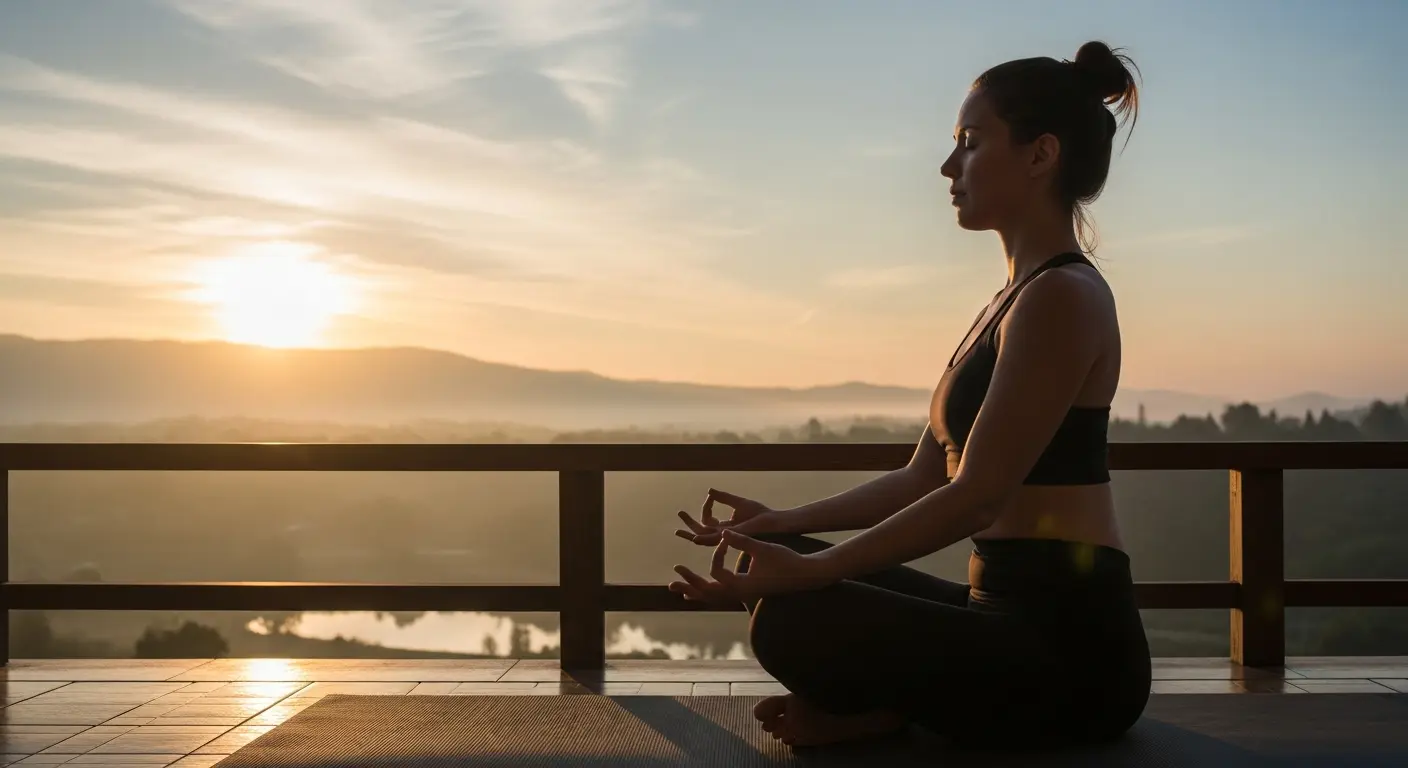
Start Your Morning Yoga Routine for a Productive Day
This morning yoga routine uses five simple poses to wake the body, increase circulation, and sharpen focus. You can complete it in 10–15 minutes without special equipment.
Follow the steps below, use steady breathing, and modify poses as needed. The goal is increased alertness and a calm, ready mind for the workday.
How to Use This Morning Yoga Routine
Set aside a quiet space with a mat or a soft surface. Wear comfortable clothes and aim to practice soon after waking or after light hydration.
Move slowly. Hold most poses for 5–8 breaths or about 30–60 seconds. Track how you feel and adjust timing gradually.
Sequence and Timing
- Warm-up: 1–2 minutes (breath awareness, gentle neck rolls)
- Poses 1–5: 8–12 minutes total
- Cool-down: 1–2 minutes (standing breath or brief meditation)
Pose 1: Mountain Pose (Tadasana)
Mountain Pose is the starting posture for balance and posture awareness. It helps align the spine and set intention for the practice.
How to do it:
- Stand with feet hip-width, weight evenly distributed.
- Soften knees, lengthen through the spine, relax the shoulders.
- Inhale to lift the chest, exhale to root through the feet. Hold 5–8 slow breaths.
Benefits: improved posture, grounding, and initial breath control.
Pose 2: Cat-Cow (Marjaryasana-Bitilasana)
This gentle flow warms the spine, reduces stiffness, and increases spinal mobility. It is ideal after standing to connect breath and movement.
How to do it:
- Begin on hands and knees in tabletop position.
- Inhale: drop the belly, lift the tailbone and head (Cow).
- Exhale: round the spine, tuck the chin, draw navel to spine (Cat).
- Repeat for 8–10 cycles, moving with the breath.
Modifications: Move more slowly or lessen range of motion if you have wrist or back sensitivity.
Pose 3: Downward-Facing Dog (Adho Mukha Svanasana)
Downward Dog stretches the back of the body and energizes the nervous system. It also builds shoulder strength and improves circulation.
How to do it:
- From tabletop, tuck toes and lift hips toward the ceiling.
- Hands shoulder-width, feet hip-width. Press palms firmly and lengthen the spine.
- Pedal the feet to release calves and hamstrings; hold 5–8 breaths.
Options: Bend the knees to keep a flat back or walk the feet in for a short plank transition.
Pose 4: Low Lunge (Anjaneyasana)
Low Lunge opens hips and strengthens legs—useful for counteracting prolonged sitting. It also helps you breathe more deeply by opening the chest.
How to do it:
- From Downward Dog, step the right foot between the hands.
- Lower the back knee to the mat and lift the chest, hands on the front thigh or overhead.
- Hold 5–8 breaths, then switch sides.
Tip: Engage the core to protect the lower back and keep the front knee aligned over the ankle.
Pose 5: Seated Forward Fold (Paschimottanasana)
The final pose calms the nervous system and stretches the spine and hamstrings. It helps bring the practice to a quiet finish and prepares you for focused work.
How to do it:
- Sit with legs extended, spine tall. Inhale to lengthen the spine.
- Exhale and hinge from the hips to fold forward, keeping a soft bend in the knees if needed.
- Hold 6–10 breaths, then slowly roll up.
Modification: Use a strap around the feet to help reach forward with a straight back.
Simple Morning Routine Example
- 0:00–1:00 — Breath awareness and gentle neck rolls
- 1:00–2:30 — Mountain Pose and grounding
- 2:30–5:00 — Cat-Cow flow
- 5:00–8:30 — Downward Dog variations
- 8:30–11:30 — Low Lunges (both sides)
- 11:30–13:30 — Seated Forward Fold and cool-down
Gentle morning movement like yoga can increase blood flow to the brain and improve alertness without spiking stress hormones. A short routine can change how you feel for hours.
Practical Tips for Consistency
- Keep the routine short at first—5–10 minutes makes it easier to stick with daily practice.
- Practice at the same time each morning to build a habit loop around waking and movement.
- Use cues such as a glass of water or a specific playlist to signal the start of your practice.
Case Study: Simple Real-World Example
Alex is a software developer who felt sluggish mid-morning. He started a 12-minute morning yoga routine, practicing five days a week for three weeks.
After two weeks Alex reported better morning focus and fewer mid-morning energy dips. He found the low lunge and downward dog most helpful for reducing lower-back tension from long seated work.
Safety Notes and Modifications
Always listen to your body. If you have a medical condition or recent injury, consult a healthcare professional before starting a new exercise routine.
Use props such as blocks, straps, or folded blankets. Reduce range of motion and focus on steady breathing if you feel pain.
Closing: Build a Productive Habit
This morning yoga routine uses five accessible poses to create energy, ease tension, and sharpen focus. Keep it simple, practice consistently, and adjust timing to fit your schedule.
Even a short daily routine can change how you approach the day—more alert, calmer, and ready to be productive.