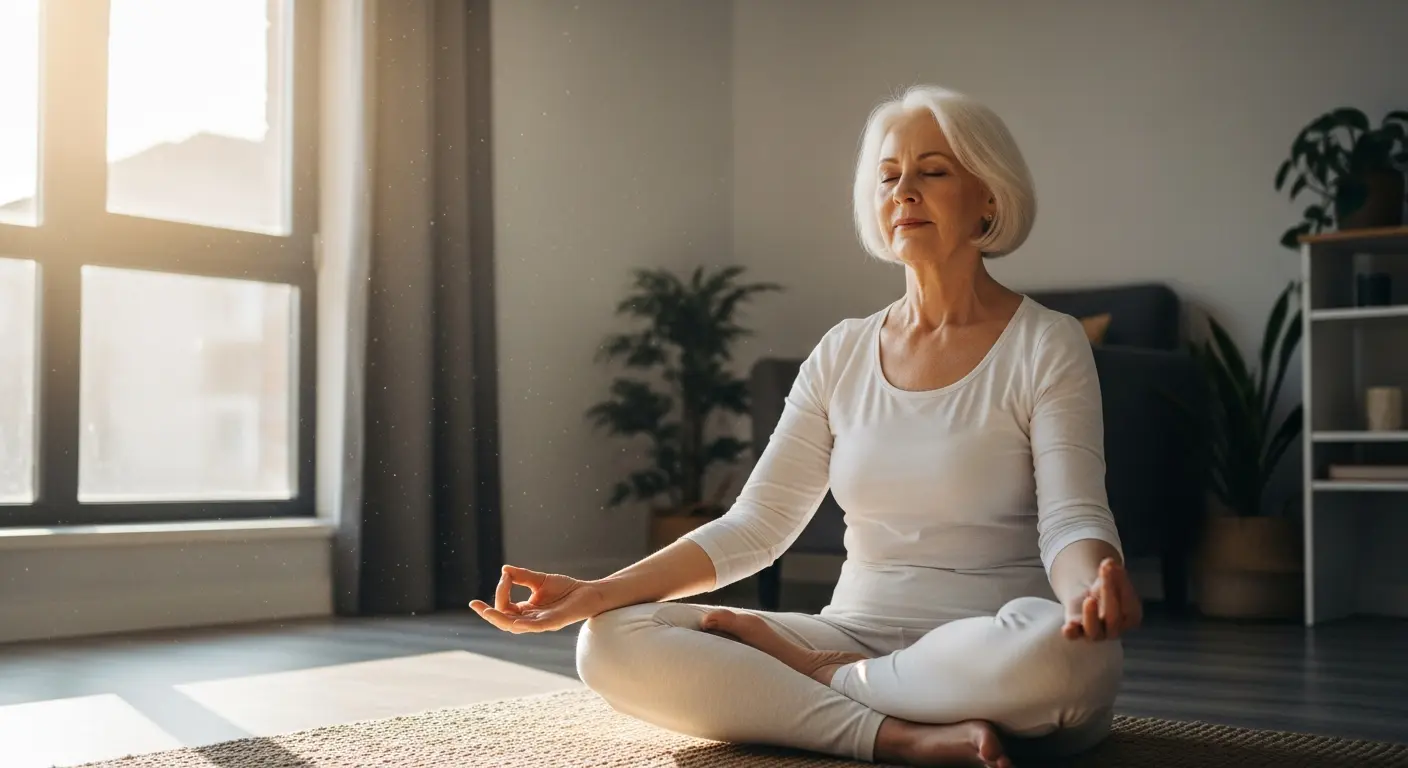
Gentle Yoga for Seniors: Why Gentle Yoga Helps Daily Mobility
Gentle yoga focuses on slow, controlled movements and mindful breathing. It reduces stiffness, increases joint range of motion, and supports better balance for everyday tasks.
This guide gives practical instructions for easy moves seniors can do at home, with modifications and safety tips. No previous yoga experience is required.
Before You Start: Safety and Preparation for Gentle Yoga for Seniors
Check with a healthcare provider if you have serious health conditions or recent surgery. Choose a stable chair and clear a safe space to practice.
Wear comfortable clothes and use props such as a cushion, strap, or wall for support. Move slowly and stop if you feel sharp pain or dizziness.
Gentle Yoga for Seniors: Basic Warm-Up
Begin with 3 to 5 minutes of gentle breathing and shoulder rolls. This warms the muscles and sets a calm pace for the practice.
- Seated breath: inhale for 4 counts, exhale for 6 counts. Repeat 6 times.
- Shoulder rolls: 5 slow circles forward, 5 backward.
Gentle Yoga for Seniors: Simple Daily Routine
Perform this routine once daily or every other day. Each move can be held for 5 to 10 slow breaths.
Modify by using a chair or wall as needed. The routine focuses on spine mobility, hip ease, ankle strength, and balance.
Move 1: Seated Cat-Cow for Spinal Mobility
How to do it: Sit near the front of the chair with feet flat and hands on knees. On an inhale, lift the chest and tilt the pelvis forward (cow).
On an exhale, round the back and tuck the chin slightly (cat). Repeat 8 to 10 cycles, moving with the breath.
Move 2: Seated Twist for Back and Digestion
How to do it: Sit tall and place the right hand on the left knee and the left hand on the chair back. Inhale to lengthen the spine, exhale to twist gently to the left.
Hold 3 to 5 breaths, then release. Repeat on the other side. Keep the hips facing forward and avoid forcing the twist.
Move 3: Chair Pigeon for Hips and Glutes
How to do it: Sit upright. Place the right ankle on the left knee, keeping the right knee open. If this is too intense, keep the foot on the floor and slide the ankle up only slightly.
Lean forward from the hips until you feel a gentle stretch. Hold 20 to 30 seconds and switch sides. Use a cushion under the knee for comfort.
Move 4: Standing Knee Lifts for Balance
How to do it: Stand behind a chair, holding the back for balance. Shift weight to the left foot and slowly lift the right knee toward waist height.
Lower slowly and repeat 8 to 12 times each side. Focus on steady breath and a controlled lowering to build balance and hip strength.
Move 5: Wall Push-Ups for Upper Body Strength
How to do it: Stand facing a wall about arm’s length away. Place palms on the wall at shoulder height and bend elbows, lowering the chest toward the wall.
Push back to the starting position. Repeat 10 to 15 times. Adjust distance to make the move easier or harder.
Move 6: Ankle Circles and Calf Raises for Foot and Ankle Mobility
How to do it: While seated, lift one foot and rotate the ankle slowly 8 to 10 times each direction. Then stand and do 10 slow calf raises, using a chair for support if needed.
These small moves support walking stability and reduce foot stiffness.
Gentle Yoga for Seniors: Modifications and Tips
- Use a chair for nearly all standing moves to reduce fall risk.
- Reduce range of motion and hold times if you feel joint discomfort.
- Focus on breathing: inhale to prepare and exhale to move or relax.
- Use a yoga strap or towel to support stretches if flexibility is limited.
Short Real-World Example
Case Study: Mrs. Garcia, age 74, began a five-minute daily routine of seated cat-cow, chair pigeon, and ankle circles. After six weeks she reported less morning stiffness and greater confidence when stepping off curbs.
Her physical therapist noted improved ankle flexibility and better posture while walking. The routine was slow, consistent, and adjusted for knee osteoarthritis.
Gentle Yoga for Seniors: How Often and Progression
Start with 10 minutes a day, 4 to 6 days a week. Increase time by 5 minutes every 2 to 3 weeks as comfort allows.
Progress by adding one challenging move at a time, increasing repetitions, or practicing standing versions when balance improves.
When to Stop and When to Seek Help
Stop any exercise that causes sharp or worsening pain, sudden dizziness, or shortness of breath. Contact a healthcare provider for persistent or severe symptoms.
If you have osteoporosis, uncontrolled blood pressure, or recent fractures, get specific guidance from a clinician before practicing standing moves.
Final Practical Checklist for Gentle Yoga for Seniors
- Warm up with breathing and shoulder rolls.
- Perform 4 to 6 gentle moves with 5 to 10 breaths each.
- Use a chair or wall for support and keep movements slow.
- Practice consistently and adapt based on comfort and progress.
This gentle yoga routine is designed to maintain daily mobility and support a safer, more active life. Keep the practice simple, move mindfully, and celebrate small gains in comfort and confidence.