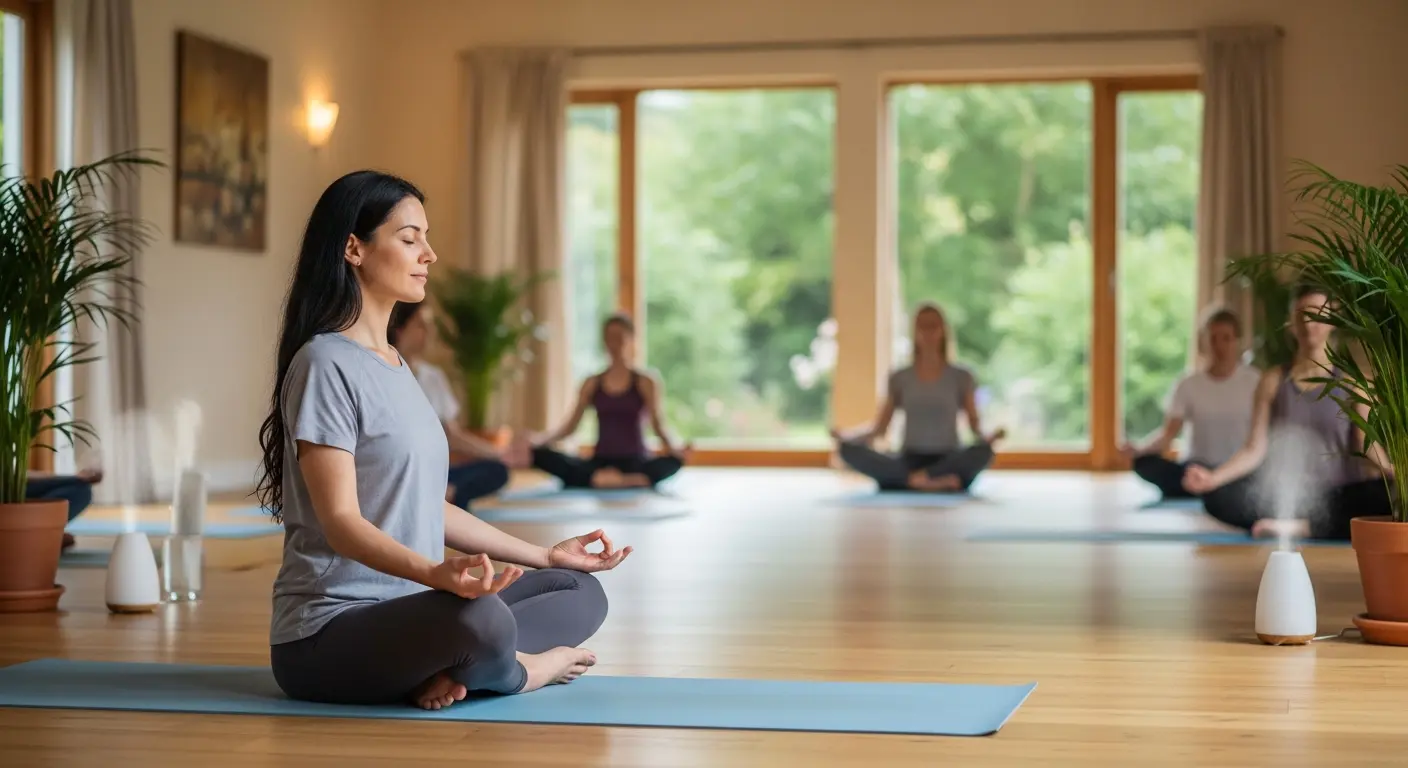
How to Use Yoga for Anxiety Relief
Yoga for anxiety relief combines focused breathing with gentle poses to lower stress and calm the nervous system. This article shows a simple, safe combo you can use in 10–20 minutes.
Why breathing matters in yoga for anxiety relief
Breath links the body and mind. When you slow and lengthen the breath, heart rate and physical tension usually drop. That change signals the brain to move out of the fight or flight response.
Using breathing with poses increases the calming effect. Focus on steady, comfortable breaths rather than forcing deep inhalations.
Breathing Techniques for Anxiety Relief
Start with two accessible breathing practices. Each is easy to learn and effective when done regularly.
Diaphragmatic (Belly) Breathing
Diaphragmatic breathing encourages slow, full breaths that expand the belly. It is safe and a good first step for beginners.
- Sit or lie comfortably with one hand on your belly and one on your chest.
- Inhale slowly through the nose for a count of 4, feeling the belly rise.
- Exhale for a count of 6, letting the belly fall. Repeat 6–10 times.
Alternate Nostril Breathing (Simple Version)
Alternate nostril breathing helps balance and focus. Do it seated with an upright spine.
- Use the right thumb to close the right nostril and inhale through the left for 4 counts.
- Close the left nostril with the ring finger, open the right nostril and exhale for 6 counts.
- Inhale through the right for 4, then switch to exhale left for 6. Repeat 4–6 rounds.
Top Poses for Yoga for Anxiety Relief
Choose poses that feel grounding and gentle. Hold each pose with calm breathing and focus on relaxed movements.
Child’s Pose (Balasana)
Child’s pose reduces tension in the back and neck while calming the mind. Keep the breath slow and even while you rest into the hips.
Cat Cow Flow
Cat cow warms the spine and synchronizes movement with breath. Move slowly: inhale to arch, exhale to round. Repeat 6–8 cycles.
Legs Up the Wall (Viparita Karani)
This restorative pose eases fatigue and shifts blood flow gently. Lie on your back with legs supported up a wall for 5–10 minutes while breathing softly.
Standing Forward Fold
A forward fold helps release tension and bring attention inward. Bend from the hips and let the head hang heavy with long exhales.
Sample 15-Minute Yoga for Anxiety Relief Routine
Use this short routine when you need quick relief. It blends breathing and poses for steady calming benefits.
- 2 minutes: Sit and practice diaphragmatic breathing (4 in, 6 out).
- 3 minutes: Cat cow flow with breath coordination (6–8 cycles).
- 4 minutes: Child’s pose focusing on long, even breaths.
- 3 minutes: Standing forward fold with slow exhalations.
- 3 minutes: Legs up the wall, soft breathing and body scan.
Practical Tips for a Consistent Practice
Small, regular practice beats rare long sessions. Aim for 10–20 minutes most days rather than waiting for long free blocks.
- Practice at the same time daily to build habit.
- Keep a soft timer and avoid checking devices during the session.
- Start seated if you feel shaky, and use props like a cushion or blanket.
Even five minutes of focused breathing can reduce subjective stress and improve clarity for many people. Short sessions add up when practiced daily.
Safety and When to Modify
Yoga is generally safe, but modify poses if you feel pain, lightheaded, or short of breath. Stop any breathing practice that causes dizziness or strong discomfort.
If you have a medical condition, heart issues, or severe anxiety, check with a healthcare provider before starting a new routine.
Real-World Example
Case study: Emma, a 35-year-old teacher, struggled with midday panic. She tried the 15-minute routine for six weeks, practicing five days per week. Emma reported that short breathing sessions before class helped lower her heart rate and improved focus. She kept a simple log noting reduced intensity of panic episodes and increased ability to continue work after practice.
Putting It Together: A Simple Daily Plan
Here is a repeatable plan you can follow to make yoga for anxiety relief part of your day.
- Mornings: 10 minutes of diaphragmatic breathing plus light poses to start calmly.
- Midday: 5–15 minute reset using the sample routine when stress rises.
- Evening: Legs up the wall and gentle breathing to unwind before bed.
Quick Checklist Before You Begin
- Find a quiet spot and a comfortable surface.
- Wear loose clothing and remove tight accessories.
- Set a gentle timer and have a cushion or blanket if needed.
Yoga for anxiety relief is a practical tool you can use daily. Focus on steady breath, gentle poses, and short consistent practice. Over time, these small actions can build better stress resilience without needing long sessions.
Note: This article offers general information and is not a substitute for medical advice. Consult a professional for personalized care.