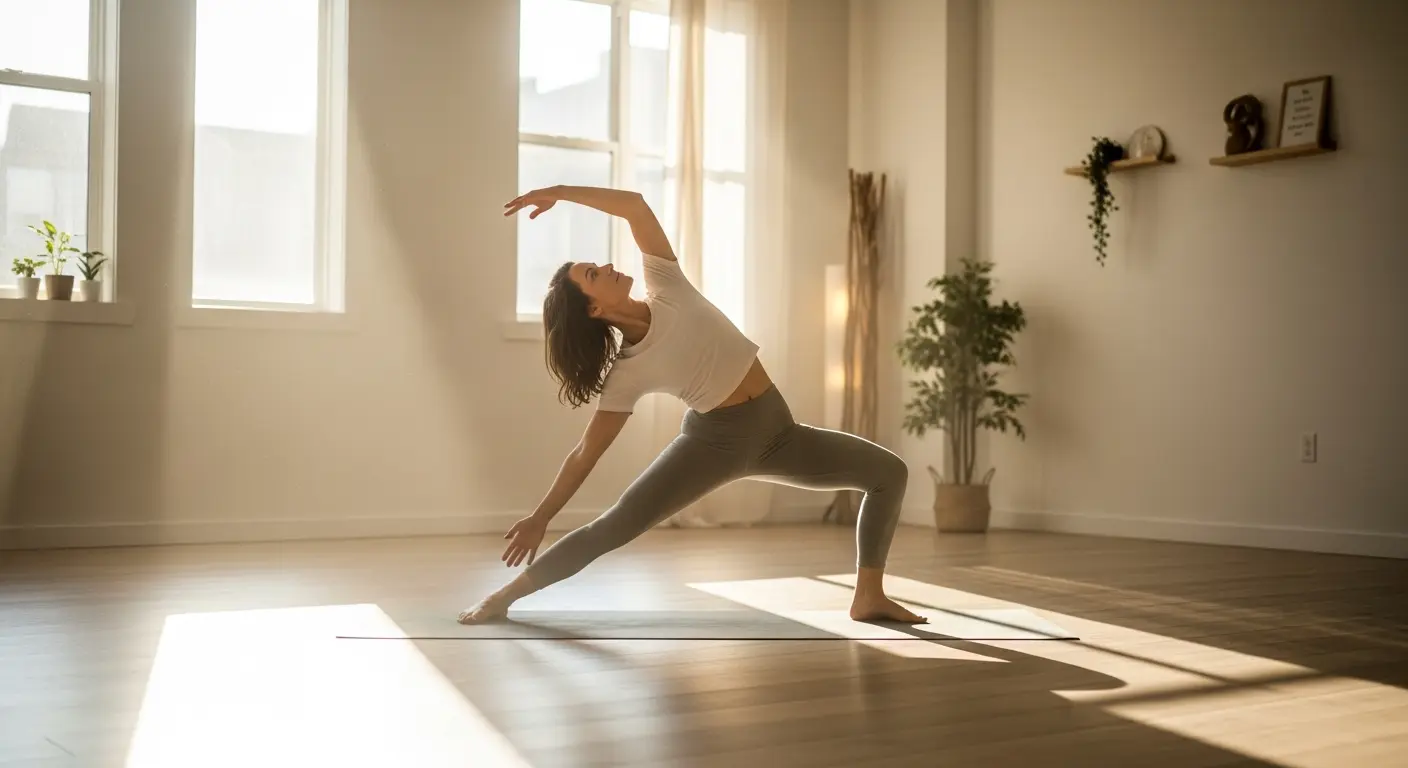
Yoga can be a practical tool to support the nervous and endocrine systems that regulate hormones. This article gives four clear, repeatable flows you can use across the month to ease common hormonal symptoms and support cycle regularity.
4 Yoga Flows for Hormonal Balance in Women
Each flow below includes purpose, a short sequence, breathing cues, recommended timing, and simple modifications. Use one flow per session or combine two for a longer practice.
How yoga supports hormonal balance
Gentle movement, focused breathing, and restorative holds influence the parasympathetic nervous system and reduce cortisol. This indirect regulation can help with sleep, digestion, and reproductive hormone signaling.
Regular, moderate practice also improves circulation to the pelvic organs and may ease menstrual cramps, irregular cycles, and perimenopausal symptoms.
Flow 1: Gentle Morning Flow for Energy and Thyroid Support
Purpose: Stimulate circulation, gently activate the neck and throat area to support thyroid function, and boost morning energy.
- Duration: 10–15 minutes.
- Sequence: 3 rounds of Cat-Cow (1–2 minutes), Neck stretches (30 sec each side), Low Lunge (5 breaths each side), Bridge Pose (3 rounds of 5 breaths).
- Breath: Inhale to expand the front body, exhale to lengthen the back body on each movement.
- Modifications: Use a block under the sacrum in Bridge for support; skip deep neck extension if you have cervical issues.
Flow 2: Restorative Evening Flow for Progesterone and Sleep
Purpose: Activate the parasympathetic system to lower evening cortisol and support sleep, which benefits progesterone balance.
- Duration: 15–25 minutes.
- Sequence: Supported Child’s Pose (5 minutes), Reclined Bound Angle with bolster (5–8 minutes), Legs Up the Wall (5–10 minutes), Deep Belly Breathing (5 minutes).
- Breath: Slow 4–6 second inhales and exhales; focus on long exhalations to calm the nervous system.
- Modifications: Use blankets or blocks for extra support under knees or back; skip bound angle if hip pain occurs and substitute supine knees-to-chest.
Flow 3: Core and Pelvic Flow for Cycle Regulation
Purpose: Strengthen the deep core and pelvic floor to support menstrual health and reduce mild cramping.
- Duration: 12–18 minutes.
- Sequence: Pelvic tilts (10–15 reps), Bridge with pelvic floor engagement (3 sets of 6 breaths), Bird-Dog (8 reps each side), Reclined Twist (1–2 minutes each side).
- Breath: Coordinate a gentle pelvic floor lift on exhale and release on inhale; avoid over-tensing.
- Modifications: Perform fewer reps or hold lighter contractions if you feel pelvic tension; consult pelvic health specialist for persistent dysfunction.
Flow 4: Flow for Menstrual and Perimenopausal Symptoms
Purpose: Offer symptom-specific relief during heavy flow, cramps, hot flashes, or perimenopausal transition with gentle, cooling, and grounding postures.
- Duration: 10–20 minutes depending on tolerance.
- Sequence: Seated Forward Fold (3–5 minutes), Supine Bent-Knee Forward (hug knees, 2–4 minutes), Sphinx or Cobra (gentle backbend, 3–5 breaths), Savasana with cool cloth on forehead (5–10 minutes).
- Breath: Focus on slow diaphragmatic breathing and a soft vocal exhale if cramps are present (sounds can ease pain perception).
- Modifications: Skip backbends during heavy bleeding if uncomfortable; choose supported forward folds instead.
How to practice these flows safely
Start slowly and respect your cycle phases. Short, consistent sessions (10–20 minutes) three to five times a week often work better than infrequent long sessions.
- Check with a clinician if you have thyroid disease, PCOS, recent pregnancy, pelvic pain, or serious health conditions.
- Avoid intense inversions if you have uncontrolled high blood pressure or certain eye conditions.
- Use props liberally: blocks, bolsters, folded blankets, and straps make poses restorative and accessible.
- Track symptoms and modify intensity during menstruation, ovulation, and perimenopause.
Slow, rhythmic breathing activates the vagus nerve and can reduce the stress hormone cortisol within minutes. Consistent practice may improve sleep and indirectly support hormone balance.
Short case study: A practical example
Maria, a 36-year-old teacher, began a 12-week plan of three 15-minute sessions per week using the flows above. She prioritized the Restorative Evening Flow twice weekly and the Core and Pelvic Flow once weekly.
After eight weeks she reported reduced cycle-related irritability and fewer nights with disrupted sleep. Her cramps decreased slightly and she felt more consistent energy across the day. Maria tracked sessions and symptoms in a simple journal, which helped her identify which flows matched each phase of her cycle.
Quick practice plan to get started
- Week 1–2: Learn the sequences. Practice each flow once to build familiarity.
- Week 3–8: Aim for three short sessions weekly. Note symptom changes and adjust intensity.
- Ongoing: Use restorative work near sleep, gentle energizing flows in the morning, and pelvic work mid-cycle as needed.
Consistency, not intensity, is the key. Small, regular practices that respect your body’s current state are most effective for long-term hormonal support.
If you have persistent or severe symptoms, consult a healthcare provider for testing and tailored treatment. Yoga complements medical care but is not a replacement for diagnosis or prescribed therapy.