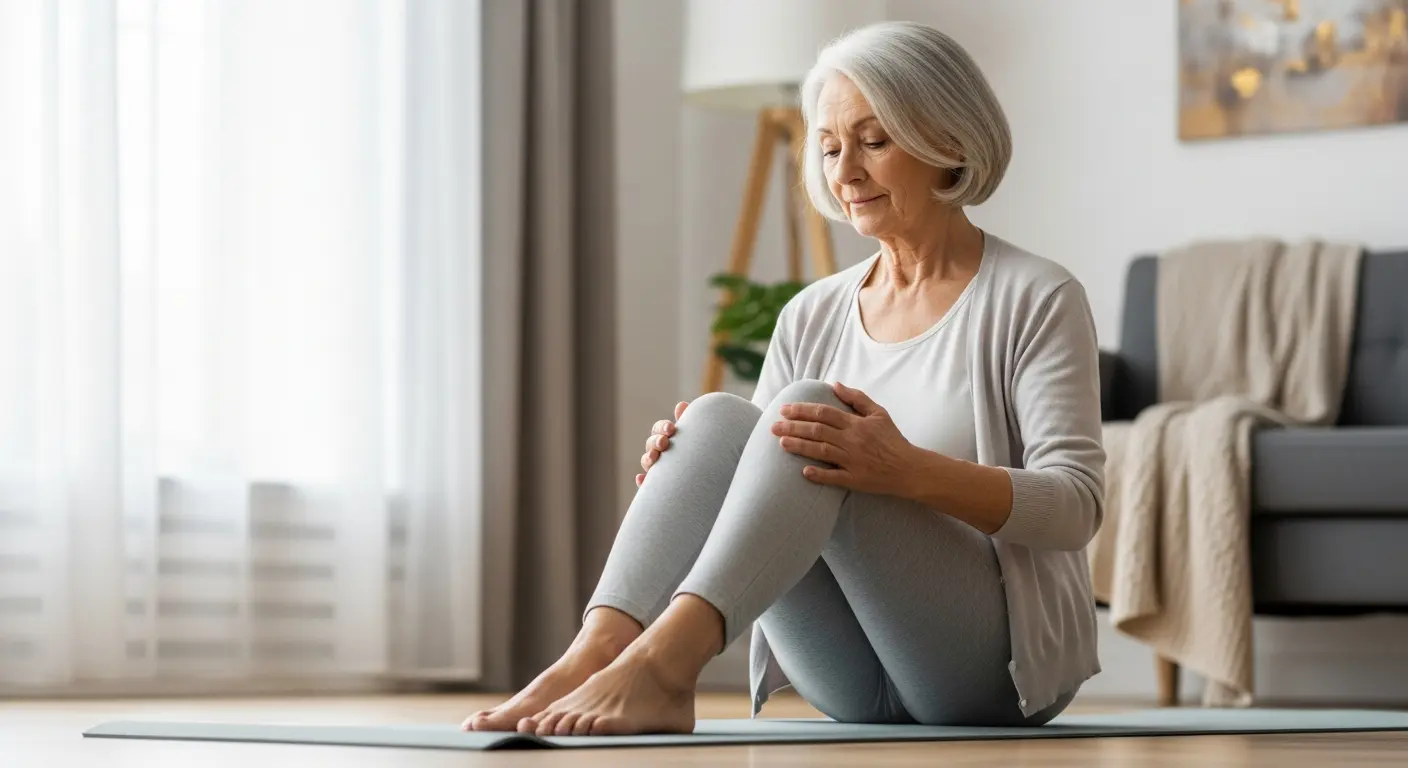
6 Yoga Poses to Alleviate Knee Pain Without Strain
This guide gives clear, practical instruction on six gentle yoga poses to help reduce knee pain without adding strain. Each pose includes alignment tips, common modifications, and brief practice notes to keep movement safe and effective.
Why choose these 6 Yoga Poses to Alleviate Knee Pain Without Strain
These poses focus on improving joint mobility, strengthening supporting muscles, and reducing tension around the knee. The aim is controlled movement and gradual loading rather than deep stretches that can irritate sensitive tissues.
General safety and preparation
Always warm up with 3–5 minutes of gentle movement, such as slow marching in place or ankle circles. Use a folded blanket or yoga mat for cushioning under the knee when needed.
If you have recent injury, advanced arthritis, or recent surgery, consult a clinician before starting. Stop any pose that causes sharp or worsening pain.
1. Tadasana (Mountain Pose) with micro-bend
Stand with feet hip-width apart and distribute weight evenly. Soften the knees with a small micro-bend (not locked) to reduce joint compression.
- Focus: alignment and balance.
- How to modify: hold onto a chair back for balance and to control weight distribution.
- Duration: 30–60 seconds, repeat 2–3 times.
2. Chair Pose Prep (Supported Utkatasana)
Stand with a chair behind you, feet hip-width. Lower hips toward the chair keeping weight in the heels and knees aligned over toes. Lightly tap the chair without sitting fully to avoid deep knee bend.
- Focus: quadriceps activation and knee control.
- Modify: use higher seat height or hold onto a countertop to reduce load.
- Reps: 8–12 small squats, slow and controlled.
3. Bridge Pose (Setu Bandha) — hip-driven, not knee-driven
Lie on your back, knees bent, feet hip-width on the floor. Press down through heels and lift the hips using glutes and hamstrings while avoiding pushing through the knees. Keep knees pointing forward and aligned with hips.
- Focus: strengthens glutes and hamstrings to support the knee.
- Modify: place a block under the sacrum for a supported bridge to reduce effort.
- Hold: 10–30 seconds, repeat 3–5 times.
4. Reclined Hamstring Stretch with Strap
Lie on your back and loop a strap around the ball of one foot. Keep the opposite knee bent with foot on the floor. Gently lift the straight leg to a comfortable range without pulling the knee into extension forcefully.
- Focus: reduces hamstring tightness that can change knee tracking.
- Modify: bend the lifted knee slightly if straightening causes discomfort.
- Hold: 20–40 seconds per side, repeat once.
5. Supported Low Lunge (Anjaneyasana) with hands on blocks
Step one foot forward into a low lunge with the back knee on a folded blanket. Place hands on blocks or on the front thigh for support. Keep the front knee stacked over the ankle and avoid letting it extend past the toes.
- Focus: opens hip flexors and builds stability around the knee.
- Modify: shorten the stance to reduce front knee bend or use extra padding under the back knee.
- Hold: 20–30 seconds per side, repeat 2 times.
6. Side-Lying Clamshell (hip rotator strength)
Lie on your side with knees bent and hips stacked. Keep feet together and lift the top knee using glute medius strength. Keep motion small and controlled to avoid twisting the pelvis.
- Focus: strengthens muscles that stabilize knee alignment during walking.
- Modify: perform without resistance first; add a thin band above knees when stronger.
- Reps: 10–15 per side, 2–3 sets.
How these 6 Yoga Poses to Alleviate Knee Pain Without Strain Work Together
Combining alignment (Tadasana), strength (bridge, clamshell), gentle loading (chair prep), and flexibility (reclined hamstring, low lunge) creates a balanced routine. The goal is to improve muscular support and mobility while avoiding deep, aggressive knee flexion.
Strengthening the hips and glutes can reduce knee pain by improving the way the thigh bone tracks over the knee. Small daily exercises often have better long-term results than occasional intense stretches.
Practical practice plan
Begin with 5–10 minutes of warm-up. Practice 3–6 of the listed poses, spending about 3–5 minutes on each area. Aim for 3 sessions per week and progress slowly.
Keep a pain journal noting any actions that improve or worsen symptoms, and adjust accordingly.
Short case study: real-world example
Case: Maria, 58, mild knee osteoarthritis. She began a tailored yoga plan using these six poses, practicing 20 minutes three times a week and avoiding deep lunges. After 8 weeks she reported less morning stiffness and improved walking endurance.
Key changes: stronger glutes from clamshells and bridges, and less hamstring tension from the reclined stretch. Maria also used a chair for balance during standing poses to protect the knee joint.
Tips to avoid strain and track progress
- Move slowly and stop if you feel sharp pain.
- Use props such as blocks, straps, and blankets to reduce load on the knee.
- Focus on muscle activation rather than depth of pose.
- Record repetitions, hold times, and pain levels to monitor improvement.
When to seek professional help
If pain increases rapidly, you experience swelling, or function declines, see a physical therapist or physician. They can tailor exercises and identify structural issues that need different treatment.
These 6 yoga poses to alleviate knee pain without strain provide a practical, low-risk way to build supportive strength and mobility. With consistent practice and mindful modifications, many people find reduced pain and improved function.