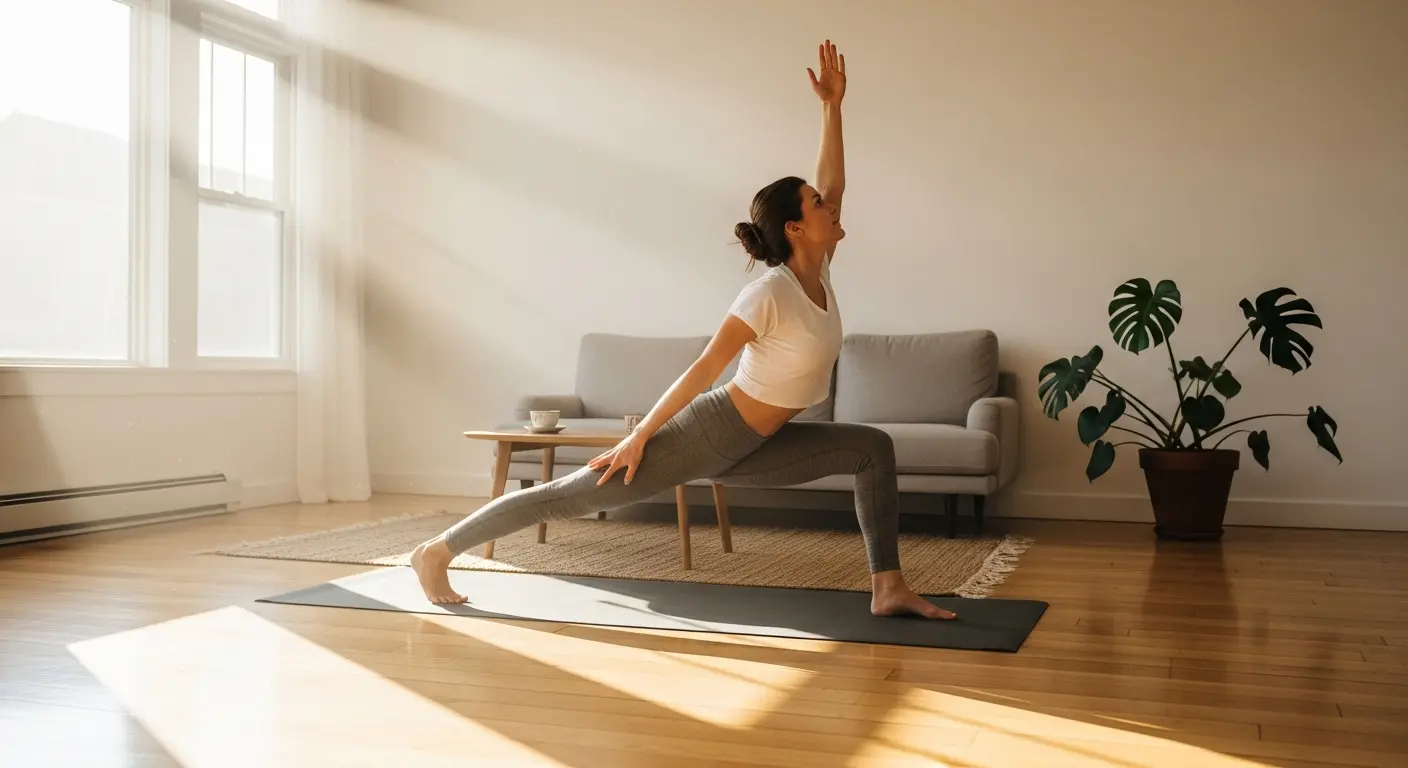
Start your day with a short, reliable routine that increases alertness and reduces stiffness. These three morning yoga flows are quick, practical, and easy to repeat. Each flow includes breathing cues, modifications, and timing so you can fit practice into busy mornings.
3 Morning Yoga Flows to Boost Energy
Choose one flow when you wake up. If you have more time, combine two. Practice on a non-slip mat, wear comfortable clothes, and keep your breath steady. Aim for 5–12 minutes per flow.
Flow 1 — Gentle Wake-Up (Morning Yoga Flow)
Time: 5 minutes. Best for groggy mornings or right after getting out of bed. Focus: mobility and breath.
- Cat–Cow (Marjaryasana–Bitilasana): 6–8 slow rounds. Inhale to drop belly and lift chest; exhale to round the spine. Move with the breath.
- Child’s Pose to Table Top: Pause in Child’s Pose for 3 breaths, then return to Table Top.
- Downward-Facing Dog: Pedal the feet for 6–8 counts to wake the calves and hamstrings.
- Low Lunge (Anjaneyasana) each side: 3 breaths per side, lift the chest on the inhale, sink the hips on the exhale.
- Standing Forward Fold to Mountain Pose: Slowly roll up with a flat back and finish in Mountain for 3 grounding breaths.
Breathing tip: Keep inhales and exhales even. Count to 3 on each inhale and 3 on each exhale to stabilize the nervous system.
Flow 2 — Energizing Sun Flow (Morning Yoga Flow)
Time: 8 minutes. Best for most mornings. Focus: heat, circulation, and rhythm.
- Start in Mountain Pose (Tadasana). Inhale, sweep arms up to lift. Exhale, hinge to Forward Fold (Uttanasana).
- Inhale to Half Lift (Ardha Uttanasana). Exhale step or jump to Plank, lower through Chaturanga or drop knees for modification.
- Inhale to Upward-Facing Dog or Cobra; exhale to Downward-Facing Dog. Hold for 3 breaths.
- Step or hop to the front of the mat and repeat 5 rounds at a steady pace.
- Finish with a Standing Forward Fold and three deep breaths to reset.
Modification: Lower intensity by performing knee push-back instead of full chaturanga. To increase energy, move slightly faster while maintaining breath coordination.
Flow 3 — Dynamic Focus Flow (Morning Yoga Flow)
Time: 10–12 minutes. Best when you need focus or have a mentally demanding day. Focus: stability, balance, and core engagement.
- Chair Pose (Utkatasana) with 5 slow breaths. Keep weight in heels and chest lifted.
- Twisted Chair (Parivrtta Utkatasana): Hold each side for 3 breaths to stimulate digestion and focus.
- Warrior II to Reverse Warrior: 3 rounds per side, linking movement with breath to build strength.
- High Lunge with a Twist: 3 breaths each side to open the hips and mobilize the spine.
- Balancing pose (Tree or Eagle): 30–45 seconds each side to sharpen concentration.
- Seated Forward Fold and 5 slow breaths to finish and down-regulate.
Breathing tip: Use Ujjayi-style soft throat breath (gentle audible breath) if comfortable. This helps maintain focus and steadiness.
Short daily movement can raise alertness and support mood. Even 5–10 minutes of focused yoga in the morning improves circulation and reduces morning stiffness.
Modifications and Safety Notes
If you have high blood pressure, avoid intense inversions like full Headstand. For wrist pain, practice plank variations on fists or forearms. Move slowly if you feel dizzy on standing; pause and breathe.
- Beginners: Start with Flow 1 or reduced repetitions in Flow 2.
- Time-limited: Pick one 5-minute flow and do it consistently for a week.
- Props: Use a block under hands for balance or a strap for tight hamstrings.
Real-World Example
Sophie is a 35-year-old teacher who used to rely on coffee to wake up. She began a 5-minute Gentle Wake-Up flow each morning for three weeks. She reported less mid-morning fatigue and needed one less cup of coffee most days. Sophie kept a simple log: practice time and one sentence about how she felt. That small habit helped her stay consistent.
Sample Weekly Plan to Boost Energy
- Monday — Flow 2 (Energizing Sun Flow), 8 minutes.
- Tuesday — Flow 1 (Gentle Wake-Up), 5 minutes.
- Wednesday — Flow 3 (Dynamic Focus), 10 minutes.
- Thursday — Flow 1, 5 minutes.
- Friday — Flow 2, 8 minutes.
- Weekend — Mix any flows or rest as needed.
Track simple metrics: how you slept, practice time, and perceived energy on a 1–5 scale. Small data helps you see progress and stick with the routine.
Closing Tips
Consistency is more effective than intensity. Start with a single flow and build to two or three as it becomes a habit. Focus on steady breath, safe alignment, and listening to your body.
Try one flow tomorrow morning and note how you feel after a week. Small, repeatable routines lead to reliable energy gains without big time commitments.